Notebook: the yo-yo on rates continues
Friday’s poor jobless figures in the United States have thrown the markets another curveball. Just as investors had convinced themselves that a second interest rate increase was finally imminent, along comes the latest disappointing payrolls numbers to cast that expectation into doubt once more. What is more, it seems certain to rekindle fears that the US economy has run out of steam and may be heading for recession – an idea that was last being thrown around at the start of the year. Expect another wave of “told you so” bearishness.
Well, we will see how right that turns out to be. Analysis of the markets’ recent history of making interest rate calls only allows for one conclusion: that nobody has any real idea where interest rates are heading (and, to be honest, it is often like this). Market-implied interest rate expectations have been consistently way off, and move so rapidly from one day to the next as to have little practical value. The correct response to anyone who tells you they are extremely confident that interest rates will or will not rise a few months hence is simple: “stop kidding yourself. You have no idea”.
Having said that, there is no doubt that the Federal Reserve would love to be able to raise interest rates and continue the process of normalising the yield curve after so many years. We could all heave a sigh of relief if that were to happen, but there is no doubt either that normalisation still looks a long way off. Even though there are tentative signs of inflation returning in the US, UK and even Japan, it still remains everywhere below the central banks’ target rate of 2%.
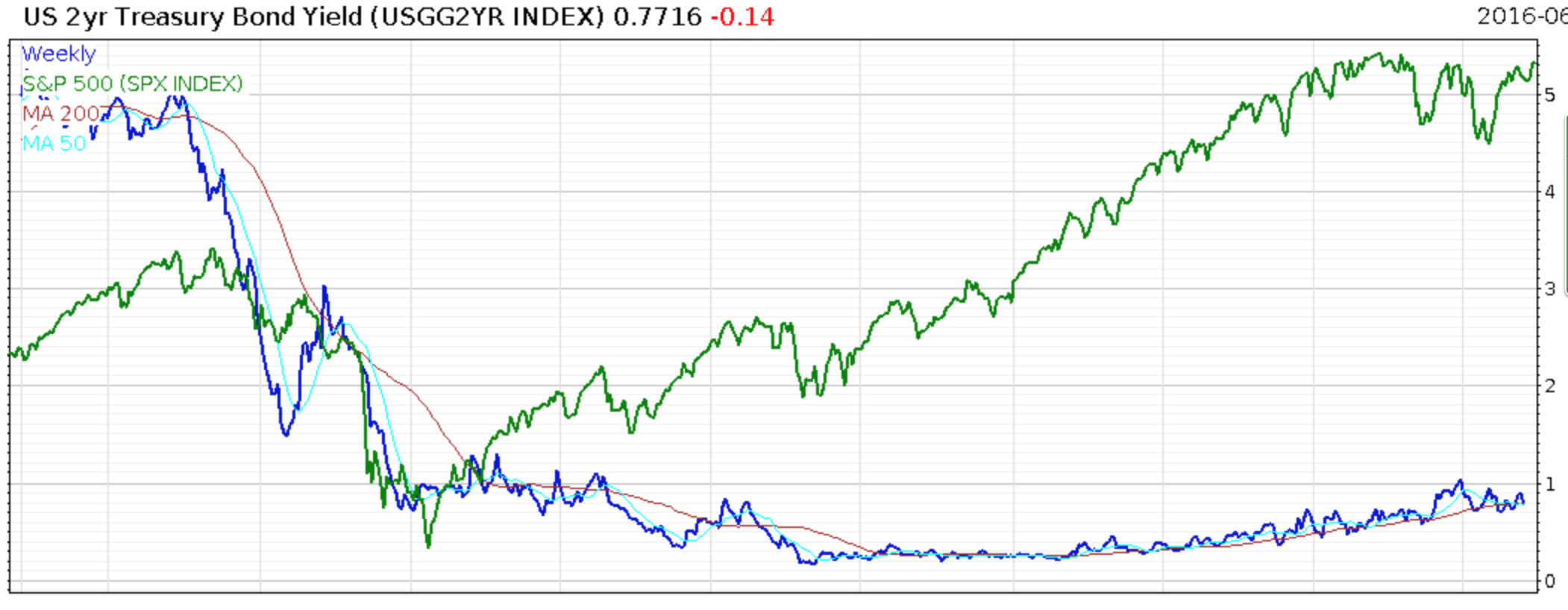
While the two-year Treasury yield has been edging up in snail-like fashion over the past four years, consistent with a slow but steady tightening of conditions, the yield curve (the structure of yields over time) has been stubbornly flattening. It is not yet inverted, which happens when long term yields fall below shorter term rates, a traditional warning sign of an imminent recession, but it is certainly not suggesting either that investors are expecting an imminent start to a positive interest rate cycle.
As far as the prospect of a recession goes, foolishly or otherwise I spend a lot of time looking at a range of indicators that attempt to highlight when a recession may be imminent. The jobless/employment figures are certainly not one: unemployment is a lagging variable, so its predictive power if very limited. A comprehensive survey of conditions provided by an organisation called Recession Alert, although far from perfect, summarises more than 50 different potential indicators and as yet provides no reason to panic, as the chart below suggests. Neither it nor other well-known publishers of leading indicators suggest that recession is imminent. But clearly nor does it paint an overly positive picture. Conclusion: real vigilance is needed.

There was not that much time on Friday for the markets to digest the implications of the poor jobless figures – there were knee-jerk reactions in gold and the dollar – so it will be interesting to see how they react over the course of the coming weeks. As far as portfolio positioning is concerned, in the current environment, my view is there is no option but to adopt the same stance as the Federal Reserve: watch the data carefully. This is no time to be making all-or-nothing bets.
Having taken on some more defensive ballast a year ago, but within an overall risk-tolerant portfolio, I am sitting pat for now. One positive factor to note however is that the often useful advisors’ bullish sentiment index in the States is currently recording a very low reading, often a contrarian short term signal to buy the market. The UK market in particular continues to look potentially attractive ahead of the Brexit referendum vote, with commodity prices stabilising and a lot of fear priced in.
For those of a more cautious frame of mind, Numis last week produced a useful summary of the generalist investment trusts which have performed best in up and down markets over the last nine years. The charts below show the average percentage rise or fall in NAVs in months when the market has risen and fallen. Although there are no great surprises in it, it is reassuring to see that the likes of Capital Gearing, Personal Assets and RIT, which all feature in the Money Makers core portfolios, are still doing the job that they set out to do. (Whether RIT’s characteristics will change if it succeeds in its surprising merger approach to Alliance Trust is an issue that we will be returning to shortly).
