Every so often I highlight a number of articles, or pieces of data, that have caught my eye, being either sensible, profound or (just as valuable) challenging to consensus views.
Opportunities in investment trusts
Selling by a big insurance company has hit the share prices of a number of investment trusts, according to the sector’s #1 analyst, Charles Cade of Numis, potentially creating some bargain opportunities, such as Witan at a 7% discount): Pension fund sell-off hits investment trust shares
For more on this issue, see also this edition of Investment Trust Intelligence (you will need to self-certify as an investment professional to access the site): Witan Discount Opportunity
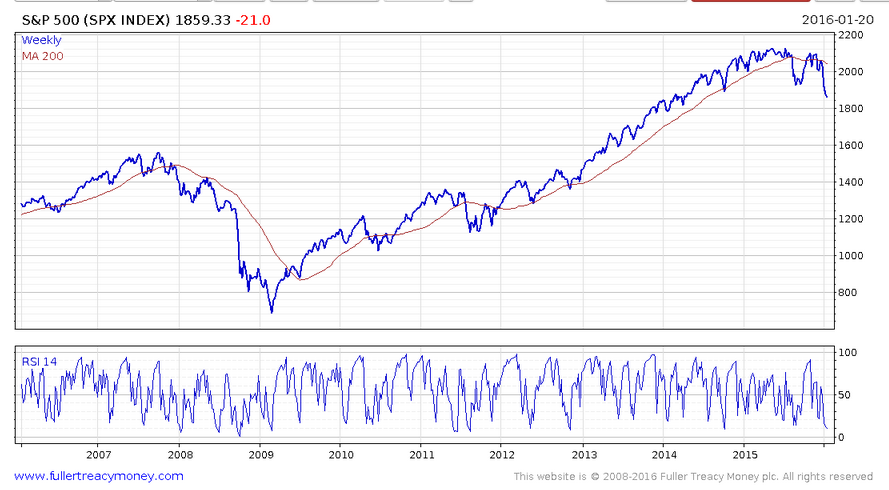
Are market valuations crazily high?
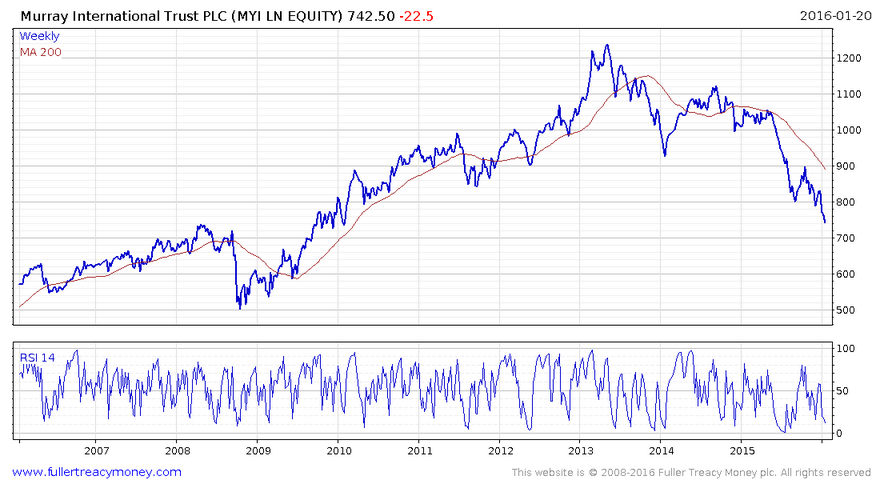
Fund manager Bruce Stout has an ultra-gloomy view of the world and the shortcomings of monetary policy, expressed in some detail in the latest Murray International annual report. (Disclosure: I have recently bought a few shares in Murray International, which have fallen to a discount after two years of poor performance. Despite a strong rebound this year, they are still yielding 5.5%).
Woodford Q&A
Neil Woodford’s held an online Q&A with his shareholders this week – part of his commitment to greater disclosure and better communication with shareholders. His most interesting comments, in my view, were those on oil companies (negative; the oil majors are obviously over-distributing at current prices), the poor short term performance of the Woodford Patient Capital investment trust (message: er, be patient…) and the likely (limited, in his view) impact of Donald Trump were he to become President (see quote of the week below): Neil Woodford Q&A
Buy-to-let a fading force?
Money Week editor Merryn Somerset Webb’s explains why in her view the sums behind buy-to-let as an investment are no longer attractive: Buy to let investing just became a very bad idea
Has the ECB shot its bolt?
“The question everyone wants answered”, according to M&G’s Stefan Isaacs, is whether the ECB has reached limits of monetary policy. His conclusion:
“The reality is that increased productivity and greater innovation is much needed to drive the Eurozone. Antiquated bankruptcy regimes need to be radically reformed, red tape needs to be removed and the banking system needs to own up to further loan losses that it has yet to provision for. These changes aren’t easily achieved, not least because they require the sort of short term pain that politicians rarely have long run incentives to deliver”.
Income investing may now be a trap
History suggests that investing for income at current levels is dangerous, says veteran Wall Street strategist Richard Bernstein. Dividend yields have been more attractive in 75% of the past 80 years, and too many investors are following the same trend – rarely a good idea: No one ever grew wealth being scared (pdf)
Look out for a rise in inflation
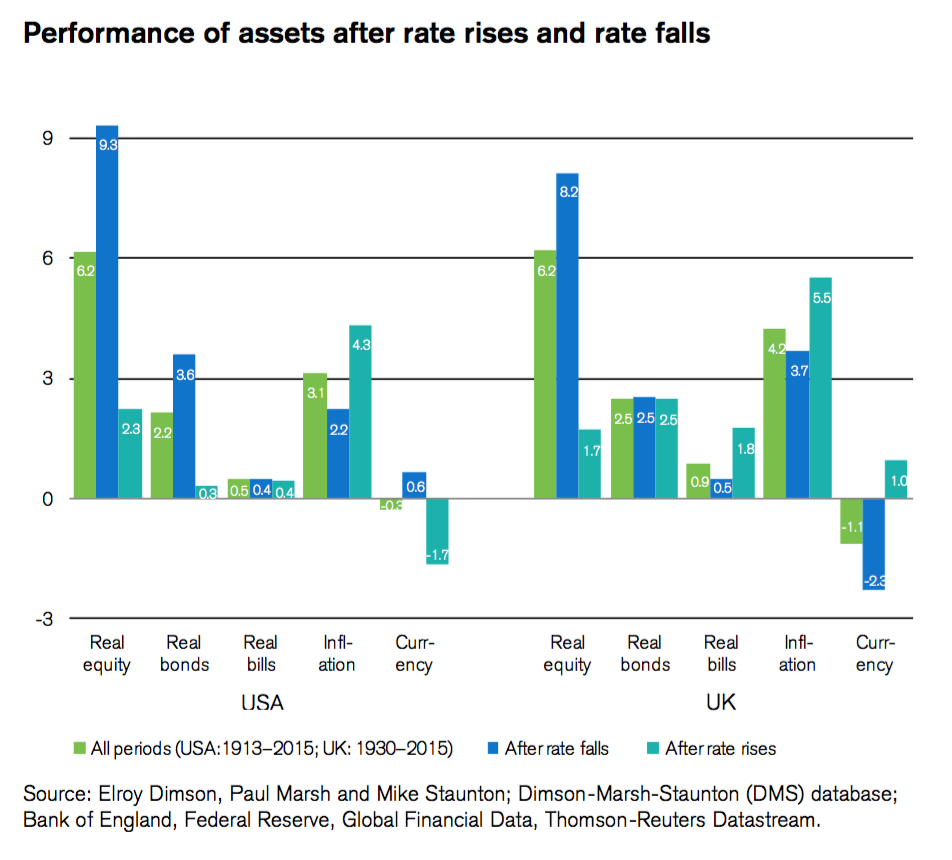
Don’t assume that the market is right about there being no rate rises this year, says Ambrose Evans-Pritchard in The Telegraph – some inflation warnings signs are becoming apparent. (I share some of these concerns – inflation when it comes always catches investors by surprise): US inflation rears its ugly head as global cycle nears danger zone
Skewed risks in equities
Jeffrey Grundlach, one of the highest profile bond fund managers in the United States, says the risk-reward ratio on risk assets (such as equities) is poor at the moment – in his view, no more than 2% upside and 20% downside. He doesn’t think there will be a US interest rate increase this year, although he also concedes there is no clear-cut indicator that suggest a recession is imminent. There are some interesting charts in the presentation this piece links to: Gundlach’s warning for risk assets
Gold has turned a corner
Find out why Charlie Morris, former asset allocation guru at HSBC, now working independently, thinks that the bear market in gold is over. His newsletter Atlas Pulse comes out monthly, and lays out what is happening in gold and crypto-currencies like bitcoin in a highly accessible way. His view: it is not yet a bull market in gold, but moving that way. Look out for his comprehensive table summarising the history of gold’s bull and bear markets: Atlas Pulse April 2016 (pdf)
Chart of the week
Nearly 20% of the world’s bonds, as measured by the JP Morgan Aggregate Bond Index, with an aggregate value of $7 trillion, are now offering negative yields – quite astonishing (and scary) numbers. The percentage has tripled in the last six months alone.

Quote of the week
“Donald Trump’s candidacy has clearly polarised opinion in the US. His popularity, in my view, is in part a product of the ongoing economic difficulties faced by many developed countries. Socio-economic groups that have not benefited from the recovery of the US economy since the financial crisis feel marginalised and are showing an increasing preference for ‘outsider’ politicians, like Bernie Sanders and Donald Trump. Trump’s more extreme political views on the campaign trail are likely to moderate significantly, if he were elected. In addition, the checks and balances in the US political system would clearly make some of his more extreme policy choices unlikely to prevail. My conclusion is, if he were elected, it would have a very limited impact on the US economy”.
Neil Woodford, founder of Woodford Investment Management
Attractive discounts in the investment trust arena
Here are the latest z-scores, as recorded by the broker Numis. A negative score indicates that the discount on an investment trust is wider than its historical average, and therefore a potentially attractive entry point, while a positive figure suggests the reverse. There may be reasons for these discount movements, which is why the lists are only described as “cheap” or “dear” in inverted commas. Always do further research before acting on these signals.

Image source: www.istockphoto.com
[printfriendly]